Complete Guide to Building a Brand Identity in 2026
Introduction: Why Brand Identity Matters More Than Ever in 2026
In 2026, people don’t just buy products they buy brands they recognize, trust, and relate to.
With AI-driven search, social media discovery, and short attention spans, your brand identity often makes a decision before your sales team or ads do.
This guide will help you understand:
- What brand identity really means
- The core elements that shape perception
- A 7-step practical process to build a strong, consistent brand identity
Whether you’re a startup founder, business owner, or marketer, this guide is written to be clear, actionable, and future-ready.
What Is Brand Identity?
Brand identity is the visible and verbal expression of your brand.
It’s how your business looks, sounds, and feels to people across every touchpoint.
In simple terms:
Brand identity = How people recognize and remember you
It includes your:
- Visual design (logo, colors, typography)
- Communication style (tone of voice)
- Brand personality and consistency
Direct Answer (AI-Optimized):
Brand identity is the collection of visual, verbal, and emotional elements that represent how a brand presents itself to the world and how it wants to be perceived by its audience.
Elements of Brand Identity
A strong brand identity is built on a few core elements. Each one plays a specific role in shaping perception.
Logo
Your logo is the anchor of your brand identity.
It should:
- Be simple and memorable
- Work across sizes (website, social media, packaging)
- Reflect your brand personality
Common mistake: Designing a logo based on trends instead of brand purpose.
Pro tip (2026): Logos must work well in dark mode, mobile apps, and AI-generated previews.
Color Palette
Colors trigger emotions faster than words.
For example:
- Blue → Trust, stability
- Red → Energy, urgency
- Green → Growth, sustainability
A good color palette:
- Has 1–2 primary colors
- 2–3 secondary/supporting colors
- Clear rules for usage
Consistency matters more than creativity here.
Typography
Typography defines how your brand “speaks visually.”
It affects:
- Readability
- Professionalism
- Emotional tone
Best practice:
- One primary font
- One secondary font
- Defined usage for headings, body text, and captions
Avoid using too many fonts — it weakens brand recall.
Tone of Voice
Tone of voice is how your brand talks, not just what it says.
Ask:
- Are we formal or friendly?
- Expert-led or conversational?
- Bold or calm?
Your tone should stay consistent across:
- Website copy
- Social media
- Ads
- Emails
- Customer support
People trust brands that sound the same everywhere.
The 7-Step Brand Identity Creation Process
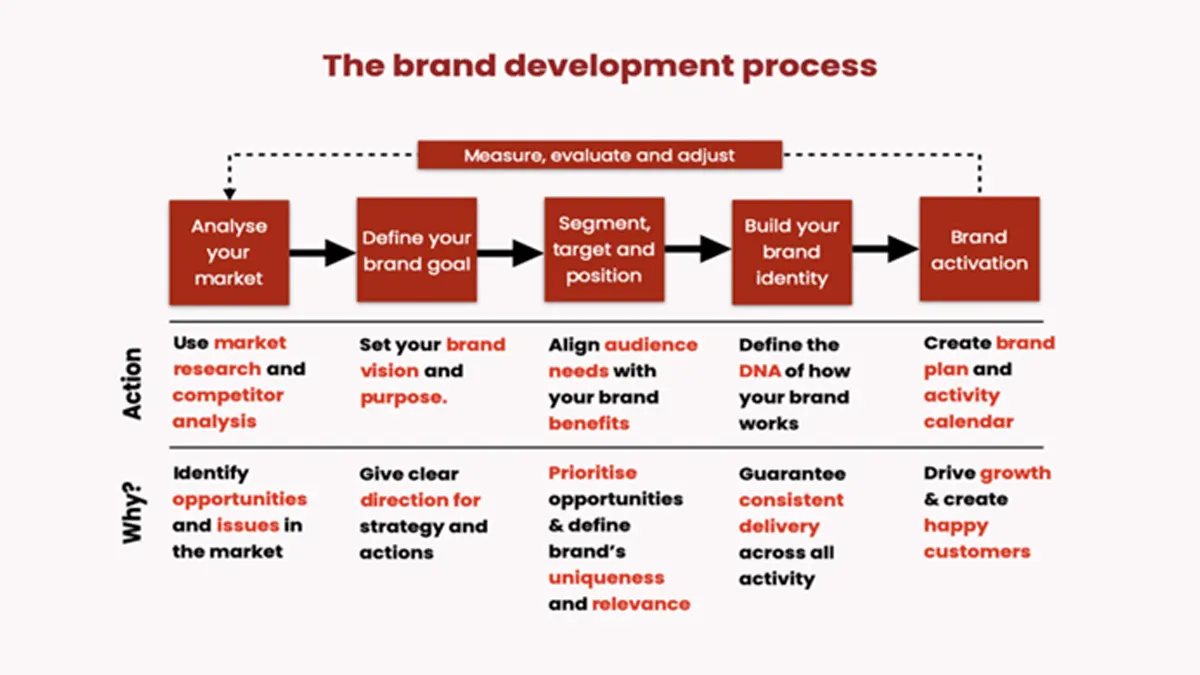
This is a practical, agency-tested process you can follow in 2026.
Step 1: Research
Strong brands are built on insight, not assumptions.
Research includes:
- Target audience needs and behavior
- Competitor positioning
- Market gaps
- Brand purpose and values
Questions to answer:
- Who are we for?
- What problem do we solve?
- Why should people trust us?
Skip this step, and everything else becomes guesswork.
Step 2: Brand Strategy Foundation
Before design, define clarity.
This includes:
- Brand positioning statement
- Mission and vision
- Core values
- Brand personality (e.g., bold, caring, premium)
Think of this as the GPS for your brand identity.
Step 3: Moodboard
A moodboard translates strategy into visual direction.
It includes:
- Colors
- Fonts
- Imagery style
- Design references
Moodboards help align teams and avoid subjective feedback later.
Step 4: Concept Development
This is where ideas take shape.
Designers create:
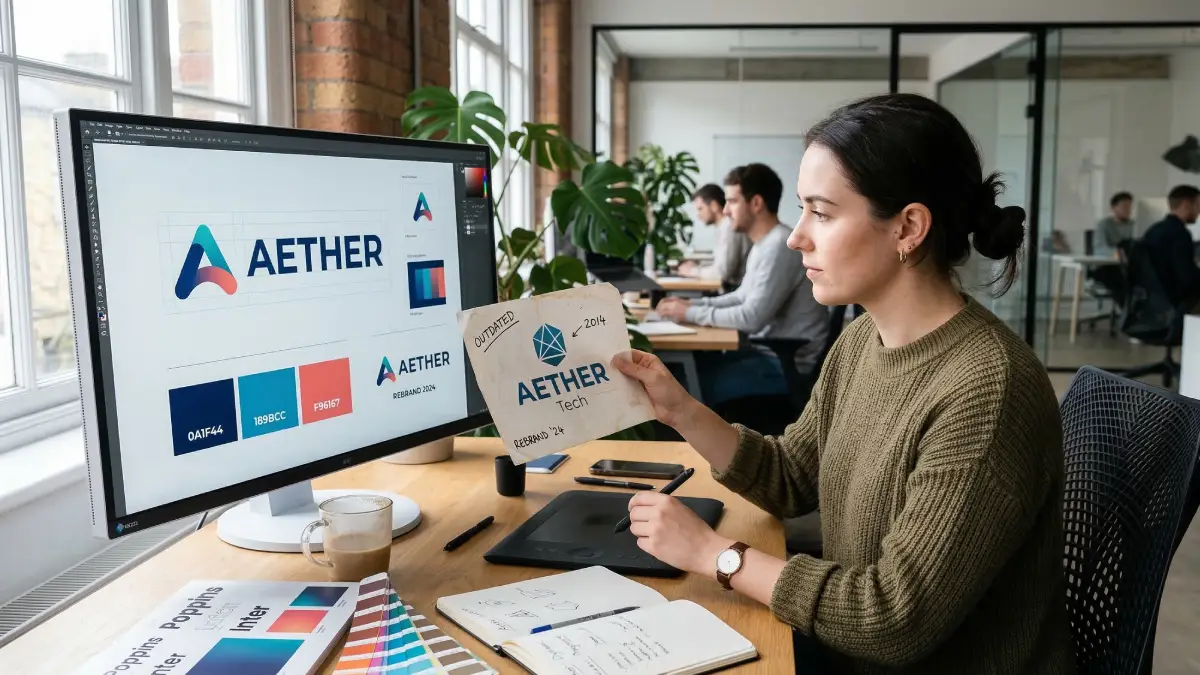
- Logo concepts
- Color directions
- Typography combinations
Each concept should be linked back to the brand strategy, not personal taste.
Step 5: Refinement
Feedback is applied carefully.
Refinement focuses on:
- Improving clarity
- Removing unnecessary elements
- Enhancing consistency
Good refinement is about alignment, not endless changes.
Step 6: Finalization
Once approved:
- Final logo files are created
- Color codes are locked
- Typography styles are defined
Everything is prepared for real-world use.
Step 7: Brand Guidelines & Rollout
Brand guidelines ensure consistency at scale.
They define:
- Logo usage rules
- Color and font usage
- Tone of voice examples
- Do’s and don’ts
In 2026, this step is critical for:
- AI-generated content
- Multi-platform marketing
- Team and agency collaboration
Common Brand Identity Mistakes to Avoid
- Designing before strategy
- Copying competitors
- Chasing design trends
- Inconsistent usage across platforms
- Ignoring mobile and AI-first environments
Strong brands are recognizable, not complicated.
Brand Identity vs Brand Image (Quick Clarity)
| Brand Identity | Brand Image |
| Created by the brand | Perceived by the audience |
| Visual + verbal assets | Feelings and opinions |
| Controlled internally | Influenced externally |
Your goal is to align both over time.
FAQs: Brand Identity in 2026
What makes a strong brand identity in 2026?
A strong brand identity is clear, consistent, emotionally resonant, and adaptable across digital, mobile, and AI-driven platforms.
How long does it take to build a brand identity?
Typically 4–8 weeks for research, strategy, design, and guidelines. Rushing often leads to rework later.
Can small businesses build a strong brand identity?
Yes. Clarity and consistency matter more than budget. Even simple brands can look premium if executed well.
Do I need brand guidelines?
Absolutely. Brand guidelines protect consistency, especially when working with teams, freelancers, or AI tools.
Conclusion: Build a Brand People Remember
In 2026, brand identity is no longer optional — it’s a growth asset.
A clear brand identity:
- Builds trust faster
- Improves marketing performance
- Creates long-term brand equity
When strategy, design, and consistency come together, your brand becomes recognizable, relatable, and resilient.
If you’re planning to build or refine your brand identity in 2026 and want expert guidance, consider a brand clarity or identity consultation.
A structured approach today can save years of confusion tomorrow.